Why Storage & Workshop Builds Earn Their Floor Space
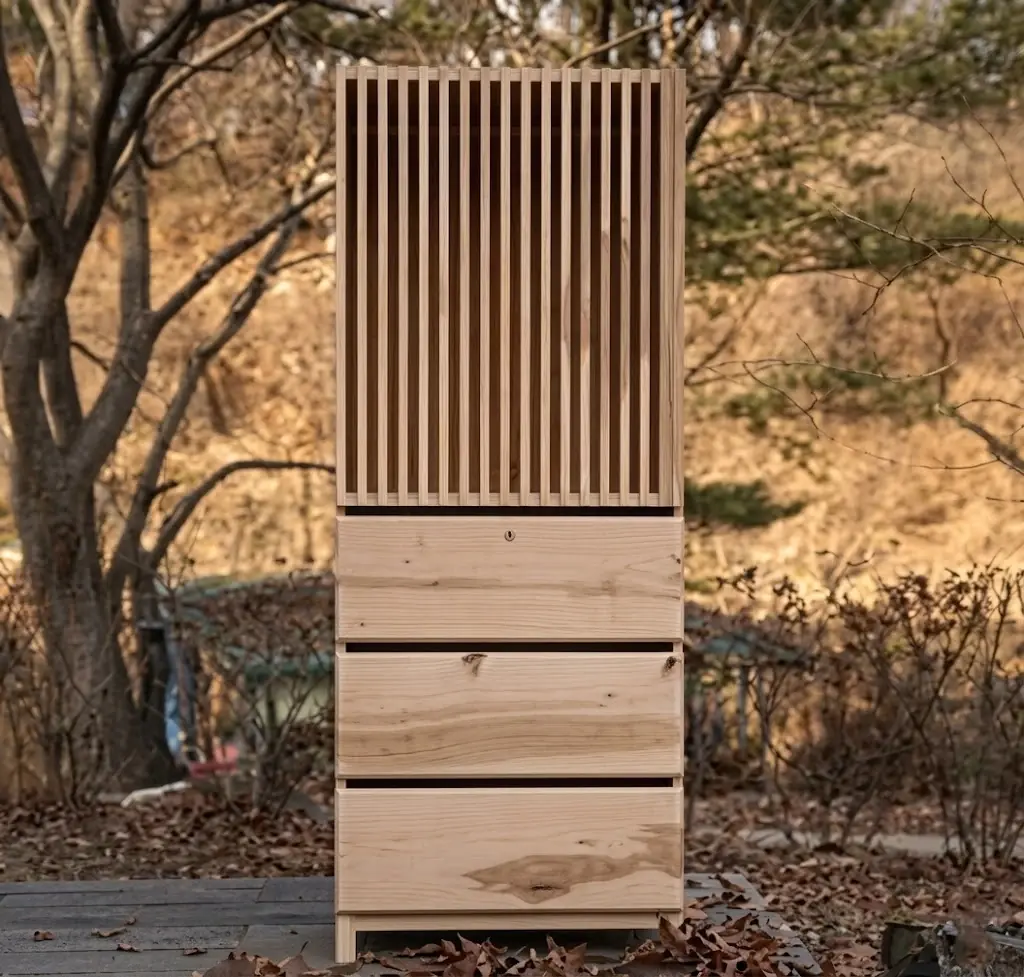
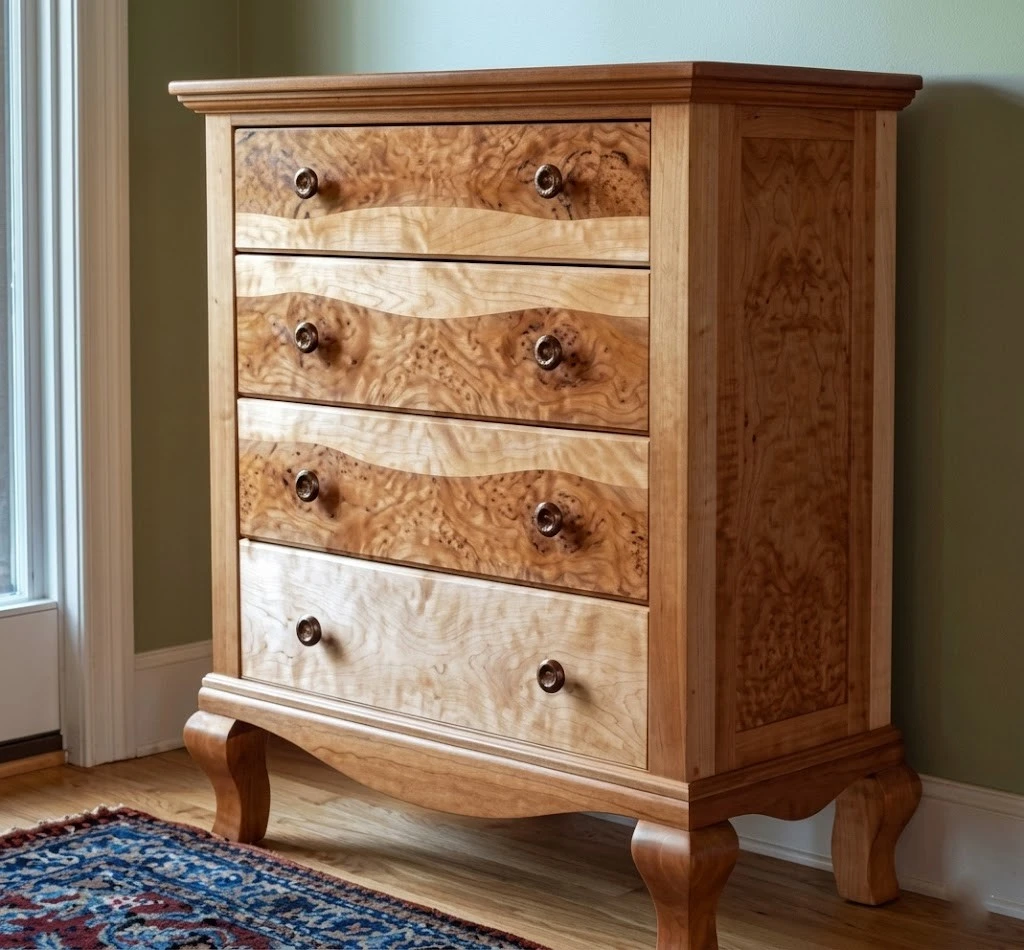
Every storage build on this page has a second job. A workbench isn't just a table — it's the flat reference surface every future build starts from. Floating shelves don't just hold books — they replace $180 retail shelves that come pre-drilled for wall anchors you don't own and sized to dimensions that don't fit your space. Unlike furniture, where aesthetics matter, storage builds are judged on load capacity, plumb-and-level tolerances, and whether the build actually stores what you told yourself it would.
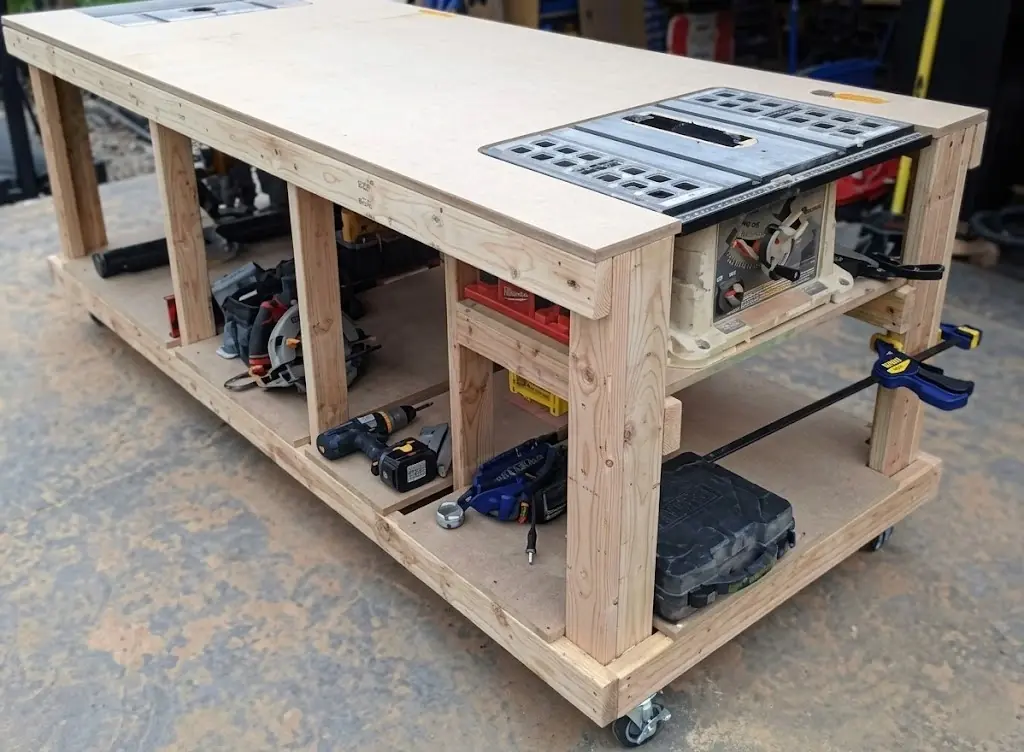
A shop-grade workbench from a woodworking retailer runs $400–$900. Built from 4×4s, 2×6s, and a sheet of 3/4″ plywood, it costs roughly $115 and takes a weekend. Heavy-duty floating shelves at Crate & Barrel start at $199 for a 30″ shelf rated to hold 25 pounds; the version on this page holds 75+ pounds on hidden brackets and costs under $40. The savings are real, but the bigger payoff is customization — shelves sized exactly for your span, workbenches built to your forearm height instead of a standard 34″.
Load-Bearing Math You Need Before You Build
Storage builds live or die by load capacity. A 1×10 pine shelf unsupported over 32 inches sags under 40 pounds. The same shelf at 24″ holds 100+ pounds without flex. For every storage project on this page we specify: span limits per wood species, hidden-bracket weight ratings, wall-anchor choices for drywall versus studs versus masonry, and the failure mode — is the shelf going to sag slowly, or drop off the wall catastrophically. Get the math wrong and your bookshelf becomes a kinetic sculpture six months in.
For workbenches, the key variables are top thickness (minimum 1½″ for real work), leg spacing (less than 48″ between leg pairs), and racking resistance (diagonal braces or plywood back panels). Both builds on this page have specific stress-tested dimensions — don't extend them 50% bigger without re-running the joint math.
What to Build First
If you don't already have a workbench, build that first. The workbench for beginners is a weekend project, uses only straight cuts, and becomes the foundation every future build gets assembled on. The floating shelves are a faster build (4 hours) but solve a narrower problem — they're the right first project if you already have a work surface and just need storage.
Every plan we used for these builds came from the 16,000-plan woodworking library, which has entire sections dedicated to shop fixtures, tool cabinets, and workshop organization.